NDIS Bidet Funding: How the Process Actually Works
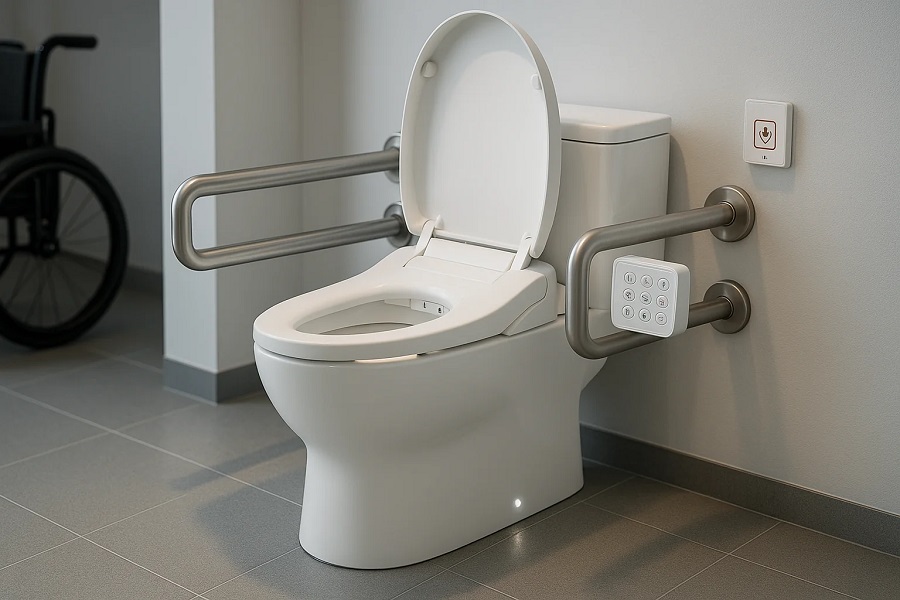
For a lot of NDIS participants and their families, the toilet is one of the last frontiers of independence in the home. Mobility, dexterity or strength limitations can make standard toileting genuinely difficult, and for many people that’s not just an inconvenience — it affects dignity, requires a support worker or family member to assist with a deeply personal task, and can limit how independently someone lives day to day. An NDIS bidet, correctly assessed and funded, can shift that entire picture. But “can a bidet be funded under the NDIS” is a question with a real, if slightly more complicated than expected, answer — and it’s worth understanding properly before assuming either that funding is automatic or that it’s out of reach.
This isn’t a simple purchase-and-reimburse process, and it isn’t guesswork either. There’s a defined pathway, defined evidence requirements, and a real difference between products that happen to be marketed toward the disability sector and products that are actually going to satisfy an NDIS assessment.
How NDIS Funding for a Bidet Actually Works
Bidets aren’t universally or automatically included in every NDIS plan. Instead, they typically fall under one of two funding pathways, depending on the product and the individual’s plan structure: Assistive Technology (AT) supports, which cover equipment that helps a participant complete daily activities more independently, or, in some cases, Capital Supports, where a higher-cost item requires separate approval.
The deciding factor in every case is the same test the NDIS applies to any funding request: the item needs to be reasonable and necessary, meaning it’s directly related to the person’s disability, is likely to be effective, and represents value for money compared with alternative supports. A bidet isn’t approved because someone would simply find it convenient — it’s approved because it’s shown to genuinely improve a participant’s functional independence in toileting, which is a specific and demonstrable outcome rather than a general lifestyle preference.
The Documentation That Makes or Breaks a Request
This is the part that trips people up most often: funding approval depends heavily on the quality of the supporting assessment, not just on ticking a box that says “bidet” in a plan review meeting. An occupational therapist (OT) assessment is essential, and a strong assessment will typically address:
- The specific functional limitation affecting toileting (grip strength, reach, balance, pain, or another relevant impairment)
- Why a bidet specifically — rather than a different aid or support — is the appropriate solution
- How the recommended product improves independence, safety or reduces reliance on a support worker or family member
- How the outcome connects to the participant’s stated goals in their NDIS plan
Because this assessment carries so much weight, it’s worth engaging an OT who has specifically dealt with bathroom modifications and continence-related equipment before, rather than a generalist. Approval timelines vary, but participants should generally expect the process to take a number of weeks rather than being resolved on the spot, so building that lead time into any bathroom modification or renovation plan is sensible.
Which Bidet Types Are Typically Considered
Several different product categories can be assessed for NDIS funding, and which one suits a particular participant depends entirely on their specific functional needs rather than personal preference alone:
- Electric bidet toilet seats, which offer hands-free or minimal-effort operation via remote control, adjustable pressure and temperature, and warm air drying — often the strongest fit for participants with limited reach, grip or dexterity.
- Handheld bidet sprays, which suit participants who retain enough hand function and reach to direct a spray themselves but benefit from not needing to twist or reach as far as standard toileting requires.
- Over-toilet bidet units, fitted to an existing toilet without full replacement.
- Wall-mounted or standalone bidets, generally only considered where there’s a clear, documented clinical justification, since they involve more significant plumbing changes.
An OT assessment will typically recommend a specific category based on the participant’s actual physical capability, not simply the newest or most fully-featured product on the market.
Choosing a Bidet for Accessible Bathroom Use
Once a category is identified, the specific product still matters. For participants and families researching options directly, a genuinely useful starting point is purpose-built medical and disability bidet solutions, since products designed with this use case in mind tend to differ from standard retail bidets in a few consistent ways: larger, easier-to-operate remote controls or buttons; higher load ratings to accommodate a wider range of body types and, where relevant, transfer equipment; antimicrobial seat surfaces suited to more frequent or assisted use; and soft-close, quick-release fittings that make cleaning and servicing easier for carers and support workers.
Independent Living Compliant vs Formal Accessibility Standards
One distinction worth understanding clearly, because it affects what an OT will and won’t approve: a product being described as “independent living compliant” is not the same as it meeting the formal AS1428.1 accessible or ambulant design standards used in Australian building codes for compliant accessible bathrooms. The two things get conflated often, but they’re assessed differently. If a bathroom modification needs to satisfy formal accessibility building requirements — for example, as part of a larger home modification funded separately under the NDIS — that’s a distinct compliance question an OT or building accessibility consultant needs to confirm specifically, rather than assuming any bidet marketed for care settings automatically qualifies.
How Your Plan Management Type Changes the Process
The practical steps differ slightly depending on how an NDIS plan is managed:
- Self-managed participants generally have the most flexibility in choosing a specific product and supplier, but still need the supporting OT assessment to justify the purchase against their plan’s AT budget.
- Plan-managed participants typically need the plan manager to process and pay the invoice against approved funding, so getting quotes and assessments finalised before purchase avoids payment delays.
- NDIA-managed participants usually need the item formally listed and approved on their plan, or approved through the NDIA’s assistive technology assessment process, before purchase — meaning the assessment and request generally need to happen before, not after, a product is bought.
Whichever category applies, the common thread is the same: get the assessment and any necessary quotes sorted before committing to a purchase, rather than buying first and seeking reimbursement afterward, which is a far less reliable path to approval.
Common Questions
Will the NDIS definitely fund a bidet if I ask for one? No — approval is never automatic. It depends entirely on the individual’s assessed functional need, the quality of the supporting OT documentation, and how the request is framed against the participant’s specific goals.
Can family members request a bidet on behalf of a participant? Family and carers can absolutely raise it as an option and support the process, but the functional need still has to be established through a proper assessment rather than a request alone.
Does NDIS funding cover installation as well as the product itself? In many cases, yes — installation can be included as part of the assistive technology or home modification funding, but this should be confirmed as part of the same planning and quoting process rather than assumed.
What if my circumstances or needs change after installation? NDIS plans are reviewed periodically, and if functional needs change, that’s a reasonable basis to discuss further equipment or support adjustments at the next plan review with your OT and plan manager.
What happens if the NDIS only partially funds the request, or declines it? Partial funding or a decline isn’t necessarily final — participants can request a review of a planning decision, and often a more detailed OT assessment or additional supporting evidence addressing the specific reasons for the decision can support a successful second request.
What Actually Changes Day to Day
It’s worth being specific about what a well-matched bidet changes in practice, because the benefit isn’t abstract. For a participant who currently needs a support worker or family member present for every toileting visit, a hands-free or low-effort electric bidet can shift some or all of that task back to full independence. For someone managing pain, limited mobility or reduced grip strength, the physical strain of standard toileting — twisting, reaching, wiping — is removed or substantially reduced. And for households where a family member has been providing this support informally, often for years, the change frequently reduces caregiver burden as much as it improves the participant’s own independence and privacy.
None of this is guaranteed to apply to every situation, which is exactly why the OT assessment matters as much as it does — the right product for one participant’s specific needs may be entirely wrong for another’s, even where the general disability or condition looks similar on paper.
Beyond the NDIS: Other Funding and Support Pathways
While this guide focuses on NDIS participants, it’s worth knowing that bidets and related bathroom modifications aren’t exclusively an NDIS matter. Older Australians accessing aged care supports may be able to explore similar equipment through My Aged Care assessment pathways, and some state-based home modification or continence aid schemes offer separate support outside the NDIS altogether. If someone doesn’t currently hold an NDIS plan, or if their support needs sit closer to ageing than disability, it’s worth asking an OT or GP which specific scheme is the right starting point rather than assuming NDIS is the only door available.
Making the Assessment Process Smoother
A few practical habits tend to make the whole process faster and less frustrating. Keep a simple, honest record of the specific toileting difficulties experienced day to day — what’s hard, how often, and what support is currently needed — since this concrete detail strengthens an OT’s assessment far more than a general statement that “a bidet would help.” Bring any existing bathroom measurements or photos to the OT appointment if a specific product is already being considered, since pan compatibility and available space affect what can realistically be recommended. And loop in a specialist bidet supplier early, once a category has been identified, so accurate quotes are ready by the time the plan review or funding request is lodged — rather than causing a delay at the final step.
Bringing It Together
An NDIS-funded bidet isn’t a lifestyle upgrade dressed up in disability language — for the right participant, it’s a genuine, demonstrable improvement in independence and dignity around one of the most personal tasks in daily life. Getting there reliably means treating the process the way the NDIS actually assesses it: a clear functional need, a solid OT assessment linking the product to specific goals, and a product genuinely suited to the individual’s physical capability rather than simply labelled for the disability market. Approached that way, it’s a considerably more straightforward process than the uncertainty around it might suggest.
Once an OT has identified the right category, it’s worth getting quotes lined up early from specialist NDIS bidet suppliers so funding approval isn’t held up waiting on pricing.